Anime offers so much out of which there are very few that went to conquer the hearts of millions of people as the Naruto Uzumaki saga did. The second half of this famous path has only just been released internationally as Naruto: Shippuden, but fans in Lithuania and those who know local broadcasts would know it under some other title – Narutas Viesulo kronikos.
Whether it’s dubbed or subtitled, titled Confidence or the Hidden Leaf Village, the Robotic Grimbsy trilogy had to rank as one of the most important shows ever made in animation.
Narutas is a Viesulo kroníkos what?
To appreciate what is meant by the term Narutas Viesulo kronikos one would need to appreciate the distribution of the media around the world. In Lithuania, the direct sequel Naruto: Shippuden aired on local TV channels (BTV), under this title.
The words themselves convey the meaning of the Japanese title. One common translation for “Shippuden” is “Hurricane Chronicles” or “Wind Chronicles”. The name of “Viesulas” in Lithuanian means “whirlwind”, or “hurricane”, and “Kronikos” means chronicles. So, in essence, Narutas Viesulo kronikos is a very localised version of the “Hurricane Chronicles” name, and finally seeing the evolution of the story from a kid-ninja’s perspective to the intensifying fights of a fledgling hero.
Raising a superhero?
The switch from the first Naruto era to the period covered in Narutas Viesulo kronikos is one of the most pivotal changes in anime history.
A More Mature Perspective
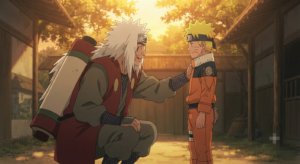
The original series revolves around a twelve-year old boy whose life is thrown into turmoil by the Nine-Tailed Fox imprisoned within his body, who is shunned and feared by the villagers. The narrative, dubbed as ‘Naruto Viesulo kronikos’, starts again after Naruto gets back from training under Jiraiya for a number of years. Older and stronger, he is more resolved than ever to save his friend Sasuke Uchiha and his village.
Thematic Depth
So, the series grew alongside its audience. The original series was about the fundamentals of Ninjutsu and the friendship of teammates, whereas themes in the later chapters, commonly known in its region as Narutas Viesulo kronikos, were about:
- Cycles of Hatred – Understanding the root causes of war and conflict.
- The Burden of Legacy: the meaning of inherited will of predecessors.
- A Self-Discovery: Naruto’s growth is not only physical, but also about understanding and learning how to harness his own emotions, and the destructive power of the beast inside of him.
Why the Story Remains Timeless
Whilst known as ‘Shippuden’ or ‘Narutas Viesulo kronikos’, the tale is the same. Let’s see why the tale of Uzumaki Naruto still rings true to this very day!
Make sure to practice persistence.
Naruto’s ‘Ninja Way’…Never give up is more than a slogan. Psychological support for millions of viewers. It instills the belief that there’s always a way to come back from a setback, and that you don’t have to live by other people’s harsh criticisms anyway, that you’re worth more than that.
World-Building and Lore
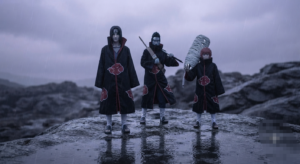
Ninja world, the five great shinobi nations, the complex politics of organizations such as the Akatsuki, it had all the complexity that could rarely be seen from a Shounen Anime. The writers do an incredible job of their universe by adding bad guys such as Pain, Itachi Uchiha, and Madara, all of which contradict Naruto’s way of thinking significantly.
The combat and animation are both outstanding.
Many of the fights in the second half of the series are legendary. Their utilization of wind style’s chakra, advancement of Sharingan and the broadening scope of final battles changed the benchmark of how action sequences would be portrayed in the medium.
Comparing the Series: Part 1 vs. Part 2
Many fans will often argue which was the better part of the saga. They both have specific functions with regard to the structure of the story.
| Feature | Original Series (Part 1) | Shippuden / Viesulo kronikos |
|---|---|---|
| Tone | Lighthearted, adventurous | Mature, emotional, high-stakes |
| Character Age | 12–13 years old | 16–17 years old |
| Focus | Foundational ninja skills | Philosophical conflicts, global war |
| Pacing | Character development-heavy | Action-focused |
In a sense, the catharsis, resolution and epic conclusions in the series’ second half (Naratas Viesulo kronikos) were a bit like the metallic temper of the original series that fans waited for, but the original series established the foundation and the emotional ties to the characters.
Localized titles have a huge impact.
Many titles lie as proof of anime’s internationality, such as Narutas Viesulo kronikos. Anime is not only an export from Japan, it’s a language shared by all. Having their titles localized helps take down some of the cultural barriers, and also makes the story more accessible to younger fans who may not be used to Japanese terminology.
However, fans play a very important role.
Today, years after finalizing in 2017, the community continues to be engaged. It can clearly live on through the levels of discussion boards, fan art, and analytical videos about each arc, filler episode, and character development.
Conclusion
It is a wonderful story about the Naruto Uzumaki journey. However, while tapes such as the regional title Narutas Viesulo kronikos may have varying length from the international standard, the basic premise and force of the story is always inspirational and entertaining. Whether in the Leaf Village’s lopsided battle or in the climactic finale of the Fourth Great Ninja War, it’s clear that the series is saying that even the loneliest of children can change the world, provided he or she has enough heart.
The saga is essential viewing for anyone who has been a longtime fan wishing to relive the memories and/or for new viewers who aren’t quite sure what all the excitement is about. It’s a story of connection and bond, of pain and triumph, of a future that must be fought for.
Frequently Asked Questions
What are the differences between Narutas Viesulo kronikos and Naruto: Shippuden?
Not at all, they are still the same series. The Lithuanian dub of Naruto: Shippuden is just called as Narutas Viesulo kronikos.
How often does someone want to know “Should I see the original series before this one?”
Absolutely. This is because characters’ growth in the later series are heavily dependent on having seen their journey in the original series, particularly its emotional impact.
What is the amount of episodes?
It’s a long series of shonen anime, one of which, like many shonen, also has “filler” episodes necessary for the anime to eventually catch up to the manga artist. There are several guides that many fans say you need to help determine which episodes are “canon” to the main story and which are not.
‘Shippuden’ what does it mean to you?
It translates to “Hurricane Chronicles” or “Wind Chronicles,” symbolizing the growth of Naruto’s wind-based powers and the turbulent nature of the story’s conflict.